


Osteochondrosis of the thoracic spine is a severe degenerative-dystrophic pathology that cannot yet be completely cured.It occurs against the background of destruction of the intervertebral discs, displacement and protrusion of the vertebrae.When diagnosing the disease, doctors take into account that the signs of thoracic osteochondrosis differ in women and men.This is explained by hormonal fluctuations in the female body.Women often adhere to diets, wear narrow high-heeled shoes, and have a hard time dealing with domestic conflicts.This affects the development, course and progression of pathology of the musculoskeletal system.
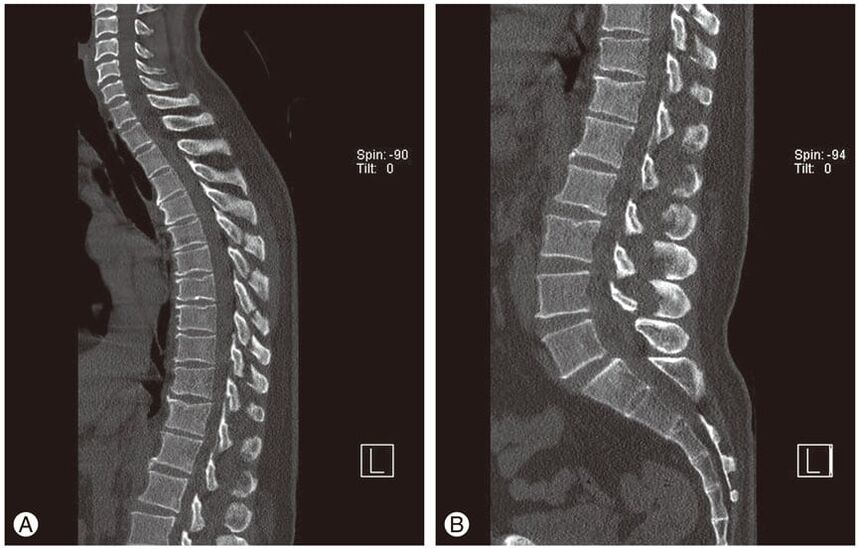
Differences between female and male clinical manifestations
Diagnosing thoracic osteochondrosis in women is more difficult due to hormonal characteristics.In young patients, it is subject to frequent monthly fluctuations.In women during natural menopause, the production of hormones in the body decreases.This can cause the development of pathologies; they need to be differentiated.For men, the typical course of the disease is characteristic, which allows it to be detected in a timely manner and treatment can begin immediately.
The clinical picture of thoracic osteochondrosis in women includes numerous signs that are so specific that sometimes it is difficult to classify them as symptoms of pathologies of the musculoskeletal system.Doctors identify the following characteristic differences between the male and female clinical picture and further progression of thoracic osteochondrosis:
- Clinical manifestations in women occur a little earlier.This is due to a spine that is more fragile and vulnerable to negative factors, and increased sensitivity to painful sensations;
- the intensity of pain in the thoracic region, stiffness varies depending on the menstrual cycle.This is explained by the production of estrogens in the body - steroid sex hormones.They reduce the severity of pain that occurs due to thinning of the intervertebral discs and spasm of the neck muscles.Therefore, during initial diagnosis, based on patient complaints, women are not always able to informatively describe the sensations that bother them;
- In men, thoracic osteochondrosis rarely causes the development of a concomitant disease.And women can experience several pathologies at once.In this case, osteochondrosis can provoke the development of a disease not related to the musculoskeletal system.Conversely, an endocrine or metabolic disorder leads to the destruction of cartilage tissue;
- For the treatment of thoracic osteochondrosis, women are prescribed drugs that are used in the treatment of men in rare cases.These are antipsychotics, tranquilizers, sedatives.The psycho-emotional state of women is more labile, so symptoms include anxiety, increased restlessness, and insomnia.Sometimes, upon learning that the disease is incurable, depression occurs, which can only be eliminated by a course of antidepressants.
Women are more likely to experience headaches.But unlike men, they do not suffer from an increase in the intensity of clinical manifestations during the day due to the action of estrogen.
An interesting fact is that as the pathology progresses, women’s libido may increase.This is the effect of steroid hormones, which are intensively produced in the body to suppress painful sensations.And the sexual desire of men is significantly reduced as a result of a disorder of the innervation of the prostate.
Typical signs of the disease
Patients usually complain to doctors of pain in the shoulder blades, which intensifies when bending or turning the body.It radiates to the sides, lower back and even forearms.The pain is felt along the intercostal nerve, its intensity increases with coughing, laughing, and sneezing.Referred pain complicates diagnosis and requires additional research and consultations with an endocrinologist, cardiologist, mammologist, and gynecologist.
Characteristic signs are stiffness, a feeling of constraint.When moving or changing the position of the body, specific clicks are heard, usually associated with the displacement of the vertebrae relative to each other.Typical symptoms of thoracic osteochondrosis in women also include the following clinical manifestations:
- sensation of “crawling goosebumps”, decreased tactility in the chest or abdomen, numbness of some areas of the skin;
- the appearance of signs of intercostal neuralgia.When lifting weights, increasing physical activity, or hypothermia, a sharp, piercing pain appears in the rib area, spreading to the chest and sides;
- development of persistent dorsalgia - a set of pain sensations of varying degrees of intensity in the back.They can occur even when inhaling, intensify when climbing stairs, doing any housework;
- muscle spasm, limiting range of motion.Muscle spasm occurs in response to compression by an osteophyte (bone growth) or inflammatory swelling of sensitive nerve endings in soft tissues.
Thoracic osteochondrosis is characterized by constant tension in the muscles located near the spine.This is detected by palpation during the initial examination, as is pain in the area of the nerve endings.There is a change in the woman's posture and gait.She tries to keep her back straight to prevent pain.But with grade 3 pathology, curvature of the spine is already noted against the background of developing scoliosis and a decrease in the distance between the vertebrae.
Specific symptoms of pathology
Thoracic osteochondrosis is rarely diagnosed.This part of the spine is equipped with a powerful muscle corset, and its strong adhesion to the ribs allows it to withstand intense static and dynamic loads.Doctors often call thoracic osteochondrosis a “chameleon disease.”To detect it, differential diagnosis is required not only of pathologies of the musculoskeletal system (arthritis, spondyloarthrosis), but also of diseases of the internal organs.
Patients often turn with complaints not to a vertebrologist or neurologist, but to a cardiologist, nephrologist, gastroenterologist, or gynecologist.The fact is that the symptoms of thoracic osteochondrosis are disguised as clinical manifestations of angina, cholecystitis, and renal colic.And an attack of intercostal neuralgia is very similar to a myocardial infarction or appendicitis.What atypical signs of osteochondrosis of the thoracic spine in women may occur during remission or during relapse:
- pain in the cardiac region.Mistaken for an angina attack or myocardial infarction.Cardiologists exclude cardiac pathologies after studying the results of ECG and other instrumental tests;
- pain in the mammary glands.Discomfortable sensations do not disappear for a long time, and their intensity does not decrease.After the patient contacts a gynecologist or mammologist, an ultrasound of the mammary glands is performed to exclude benign and malignant neoplasms;
- pain in the gastrointestinal tract (GIT).A woman turns to a gastroenterologist after experiencing constant or recurring pain in the right hypochondrium or epigastrium.When diagnosing gastritis, cholecystitis, and ulcerative lesions, various laboratory and instrumental studies are carried out;
- pain in the lower abdomen.They often occur due to compression of the nerve endings of the spinal cord.Painful sensations and urinary disorders are similar to signs of diseases of the genitourinary system.Urologists or gynecologists differentiate osteochondrosis from pyelonephritis, glomerulonephritis, and uterine fibroids.
Despite the increased libido caused by the production of estrogen, dysfunction of the reproductive system is detected in patients.Anorgasmia (lack of orgasm) develops against the background of compression of the nerves innervating the lower part of the thoracic area of the back.
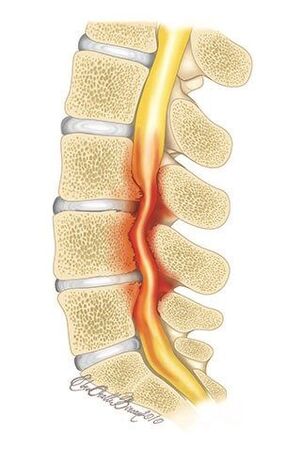
The close localization of pathologies to internal organs and the common innervation causes very specific clinical manifestations.Sometimes they are disguised as cerebrovascular accidents, renal failure, hepatic colic and even dental diseases.The medical literature describes cases of removal of treated teeth due to severe constant pain at their base.Subsequently, the cause of the pain syndrome was established - neurological symptoms of thoracic osteochondrosis.
Vertebrological signs are more typical for cervical pathology, but are sometimes detected in severe cases of thoracic pathology.Destructive and degenerative processes in the vertebrae and discs provoke sharp jumps in blood pressure, dizziness, impaired coordination of movements, headaches, and tinnitus.There have been cases of decreased visual acuity.
Psycho-emotional disorders (tearfulness, anxiety, mood swings) are diagnosed in many patients.Health problems, news of an upcoming surgical operation, and decreased physical activity sometimes become causes of depression.
How to eliminate the symptoms of thoracic osteochondrosis
Treatment methods for degenerative-dystrophic pathology in women and men are the same.Destroyed cartilage tissue cannot be restored, so the main goals of therapy are to reduce the severity of symptoms and prevent further spread of the pathology.
When choosing a method, the doctor takes into account the degree of destructive changes, the presence of an inflammatory process in the soft tissues, and the stage of thoracic osteochondrosis.Women are prescribed antidepressants, tranquilizers, and sedatives much more often than men.During natural menopause, hormone replacement therapy can be prescribed, which is also necessary for the prevention of osteoporosis (low bone mass).
To eliminate pain due to thoracic osteochondrosis in women, drugs of various clinical and pharmacological groups are used:
- non-steroidal anti-inflammatory drugs (NSAIDs)in tablets.After a week of taking it and feeling better, women are prescribed external forms of NSAIDs;
- hormonal drugs.Glucocorticosteroids are usually used for drug blockades;
- muscle relaxants.Relaxes skeletal muscles, relieves painful muscle spasms;
- chondroprotectors.Partially regenerate damaged hyaline cartilage, and after a couple of weeks of course use they have an analgesic effect.
Physiotherapeutic procedures are actively used in the treatment of thoracic osteochondrosis: UHF therapy, laser therapy, magnetic therapy, applications with ozokerite, paraffin, bischofite.Patients are shown massage, physical therapy, swimming, and yoga.
If a woman does not seek medical help, then diseases of the internal organs may soon develop.They are provoked by protrusion of the intervertebral disc into the narrowed spinal canal and the formation of hernias.Deterioration of the spinal column leads to compression of the spinal cord, and then to the occurrence of renal, hepatic, gastrointestinal or cardiovascular pathologies.